Leadership
The manager effect: your biggest mental-health lever
5 May 2026 · 7 min read · AhaTherapy team
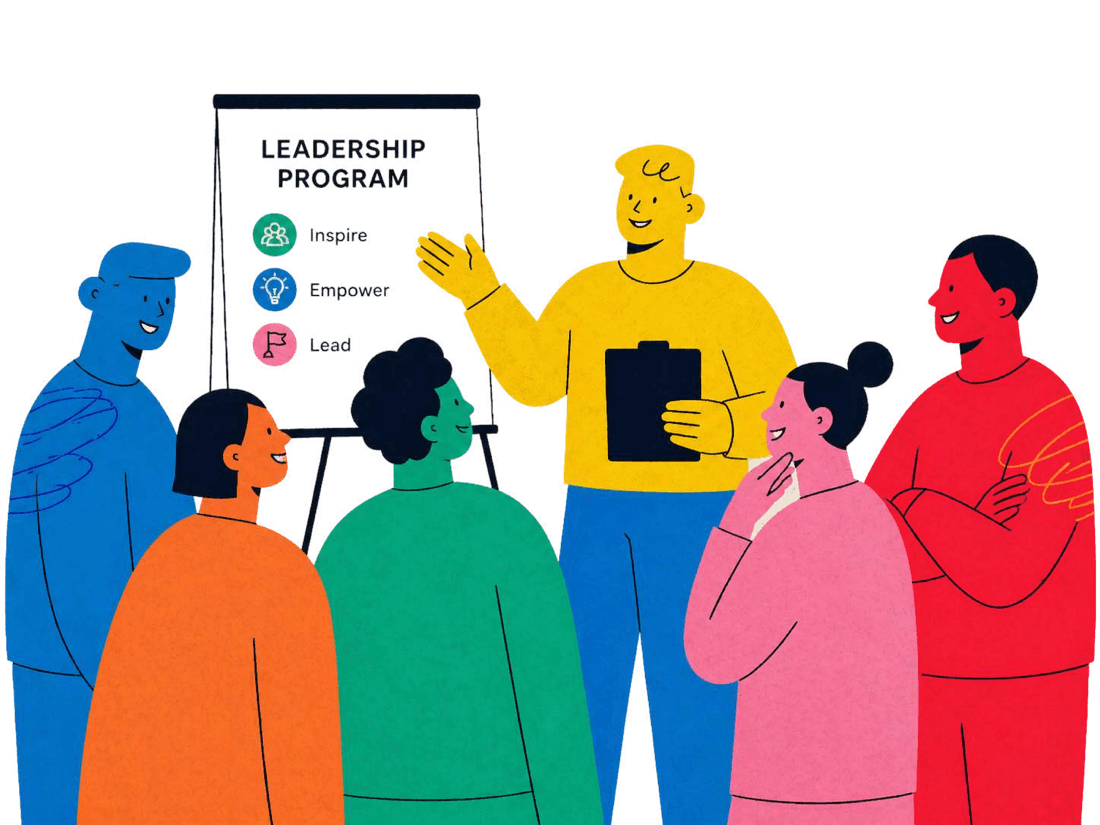
Ask most People leaders where workplace mental health is decided, and they will point to the benefits page: the EAP, the counselling sessions, the wellness app. Those things matter. But they are not where the daily weather of a person's working life is set. That weather is set by one relationship, repeated across hundreds of small interactions a week. The single largest manager impact on mental health is not a policy or a perk. It is the line manager, the person who assigns the work, sets the deadline, runs the standup, and decides whether a mistake is a learning moment or a humiliation.
This is not a soft observation. A 2023 survey of around 3,400 workers across ten countries, run by the Workforce Institute at UKG, found that people rated their manager's effect on their mental health about as high as their partner's, and higher than their doctor's or therapist's. Sit with that. The person who signs off your leave has a hand on your nervous system comparable to the person you live with. For an Indian employer carrying PF, ESIC, and the real cost of attrition, that makes the manager the most leveraged, most under-invested mental-health intervention you already employ.
Why the manager sits closer to mental health than the benefits desk
Decades of occupational health research converge on a simple mechanism: chronic stress at work is driven less by how much work there is and more by how much control a person has over it. High demands plus low control is the classic recipe for strain. The manager is the person who, in practice, sets both. They decide the workload, the deadline, and crucially how much say the employee has in how the work gets done.
Three of the strongest protective factors are largely in a manager's gift. Job control: whether you can shape your own day or are micromanaged through it. Role clarity: whether you know what success looks like, or are judged against a moving target nobody wrote down. And psychological safety: whether you can flag a problem, admit you are stuck, or push back without it being held against you. None of these come from a benefits vendor. Most of them are decided in the manager relationship, every week.
This is also why a generous EAP can sit unused while burnout climbs. An employee whose manager treats every question as incompetence will not suddenly feel safe because there is a helpline number on the intranet. The helpline is downstream. The manager is upstream.
~12 billion
Working days estimated lost globally each year to depression and anxiety, per WHO
~US$1 trillion
Annual global productivity loss linked to depression and anxiety, per WHO
~US$4
Estimated return for every US$1 invested in scaled-up treatment of depression and anxiety (2016 WHO-led study, Lancet Psychiatry)
0.5x to 2x salary
Commonly cited range for the cost of replacing a departing employee (SHRM and Gallup)
Psychological safety is the part you can actually engineer
Of those three levers, psychological safety is the most studied and the most teachable. The term was popularised by Harvard's Amy Edmondson, who defines it as a shared belief that the team is safe for interpersonal risk-taking: that you can ask a question, raise a concern, or admit an error without fear of being punished or shamed. It is not about lowering standards or being nice. In Edmondson's account, high-performing teams pair high safety with high accountability.
Google's internal study of its own teams, known as Project Aristotle, reached a similar conclusion from a different direction. After examining what separated effective teams from struggling ones, the research found that how a team worked together mattered more than who was on it, and psychological safety stood out as the top dynamic. Teams where people felt safe to speak up tended to outperform teams stacked with individual talent who did not.
The reason this matters for mental health is direct. In a low-safety team, every interaction carries a small threat assessment. People hide mistakes until they become crises, stay quiet about overload until they break, and burn cognitive energy managing impressions instead of doing the work. That low-grade vigilance, sustained for months, is exactly the soil burnout grows in.
How safe does your team actually feel?
Managers often rate their own teams as safer than the team rates itself. This short, anonymised check turns the abstract idea of psychological safety into a handful of concrete questions you can answer about your own team today. It takes about three minutes and gives you a candid read on where the gaps are, before they show up as attrition.
Rate your team
0/7 answeredOn my team, it is safe to admit a mistake without it being held against you.
People can raise problems and hard questions openly.
It is easy to ask others on this team for help.
Members of this team are able to bring up issues outside their own role.
No one on this team would deliberately undermine someone else's effort.
People feel able to take a considered risk or share a half-formed idea.
Differences of opinion are welcomed, not penalised.
Burnout is an occupational phenomenon, not a personal failing
The framing matters because it tells you where to intervene. The WHO's ICD-11 describes burnout as an occupational phenomenon rather than a medical condition, and characterises it through three dimensions: exhaustion, cynicism or mental distance from the job, and reduced professional efficacy. Read those three again and notice how closely they map to the absence of the manager levers above. Exhaustion tracks workload and control. Cynicism tracks how people are treated and whether their concerns land anywhere. Reduced efficacy tracks role clarity and whether anyone notices good work.
Because burnout is occupational, the most durable response is also occupational. Resilience workshops and meditation apps can help individuals cope, but they tend to treat the symptom while leaving the source running. If the deadline structure, the role ambiguity, and the manager behaviour stay the same, the same people are likely to burn out again, plus the next cohort. Work on the employer cost of poor mental health, including analyses by firms such as Deloitte, points the same way: the bill shows up as absenteeism, presenteeism, and turnover, and the larger returns tend to come from prevention and from manager and culture-level changes, not from a single point solution bolted on at the end.
For Indian workplaces this has texture. Long-hours norms, blurred boundaries in always-on roles, shift work in operations and support functions, and a strong cultural reluctance to be seen as the one who cannot cope all raise the stakes. A manager who normalises taking leave, who protects focus time, and who responds to a flagged problem with help rather than blame is doing more for mental health than most standalone programmes ever will.
Four manager behaviours worth training this quarter
Pick behaviours, not slogans. One: open one-to-ones by asking about load and blockers before status, so problems surface early. Two: write down what good looks like for each role, so people stop guessing. Three: respond to the first mistake someone reports with curiosity, not consequence, because that single reaction teaches the whole team whether it is safe to speak. Four: protect recovery actively, model taking leave and switching off, and treat a colleague's time off as normal rather than negotiable. None of this requires budget. All of it requires managers who have been shown how, and held to it.
“Psychological safety is not about being nice. It is about candour: being direct, being willing to say what you think, and admitting when you are wrong.”A characterisation of Amy Edmondson's account of team psychological safety
The lever is trainable, and that is the whole point
The most useful thing about the manager effect is that little of it is fixed personality. Job control, role clarity, and psychological safety are practices, not traits. They can be defined, taught, observed, and improved, the same way any other management skill is. A manager who runs blameless retrospectives, writes clear expectations, and asks about load before status is not a different kind of person. They have been shown a different set of moves and given reason to use them.
That reframes the investment question for any People function. The instinct under pressure is to add another benefit, another app, another awareness week. Those have their place. But the highest-leverage spend is often upstream: equip the people who set the daily weather. Measure psychological safety as seriously as you measure engagement. Make manager behaviour part of how managers are themselves evaluated. And do it within the guardrails the law now expects: the DPDP Act 2023's principles of consent, purpose limitation, and the rights of the data principal apply squarely to anything you collect about employee wellbeing, so keep it anonymised and keep it honest about what it is for.
This is the lens we take at Aha, but the underlying point stands on its own and predates any product. If you want to move mental health at work, you do not start with the helpline. You start with the manager. They are already one of the biggest levers you have. The only open question is whether you are training them like it, or leaving the most important relationship in the building to chance.
Frequently asked
Does a manager really affect mental health as much as the research suggests?+
A 2023 survey of around 3,400 workers across ten countries, run by the Workforce Institute at UKG, found that people rated their manager's influence on their day-to-day mental health about as high as their partner's, and higher than their doctor's or therapist's. The mechanism is well established in occupational health research: managers control the factors that drive or relieve chronic work stress, namely workload, job control, role clarity, and psychological safety. So the finding is less about the title and more about how much of a person's working life one relationship governs.
What is psychological safety, and how is it different from just being nice?+
Psychological safety, a term popularised by Harvard's Amy Edmondson, is a shared belief that a team is safe for interpersonal risk-taking: you can ask questions, raise concerns, and admit mistakes without being punished or shamed. It is not lowered standards or constant agreeableness. In Edmondson's account, the strongest teams pair high safety with high accountability. Google's Project Aristotle research pointed to psychological safety as the standout dynamic separating its more effective teams from its struggling ones.
Is burnout an individual problem or an organisational one?+
The WHO's ICD-11 describes burnout as an occupational phenomenon rather than a medical condition, characterised by three dimensions: exhaustion, cynicism or mental distance from the job, and reduced professional efficacy. Because the source is occupational, the most durable fixes tend to be occupational too: workload design, role clarity, and manager behaviour. Individual resilience training can help people cope, but it does not change the conditions producing the strain, so the same teams tend to burn out again.
What should an Indian employer do first, given limited budget?+
Start upstream with managers rather than with another benefit or app. Train a small set of concrete behaviours: ask about load and blockers before status in one-to-ones, write down what good looks like for each role, respond to the first reported mistake with help rather than blame, and actively protect recovery and leave. Measure psychological safety alongside engagement, keep any wellbeing data anonymised and consistent with the DPDP Act 2023, and make manager behaviour part of how managers themselves are assessed.
Aha for Work is a whole-person employee wellbeing platform: clinical mental health, physical health, life skills and financial wellness, with anonymised intelligence HR can act on. Book a consultation →